Combustion engines steamed their way to mainstream transport adoption over the past century but there’s a new, more sustainable option in town: electric vehicles (EVs). Quieter, gentler on the environment and increasingly able to cover long distances, EVs are a viable alternative to petrol and diesel-powered machines but what do we really know about them?
Let’s take a closer look at EVs, why they are gaining such momentum and how they can connect with renewable energy projects to create a legacy of meaningful climate action.
What are EVs, and how do they work?
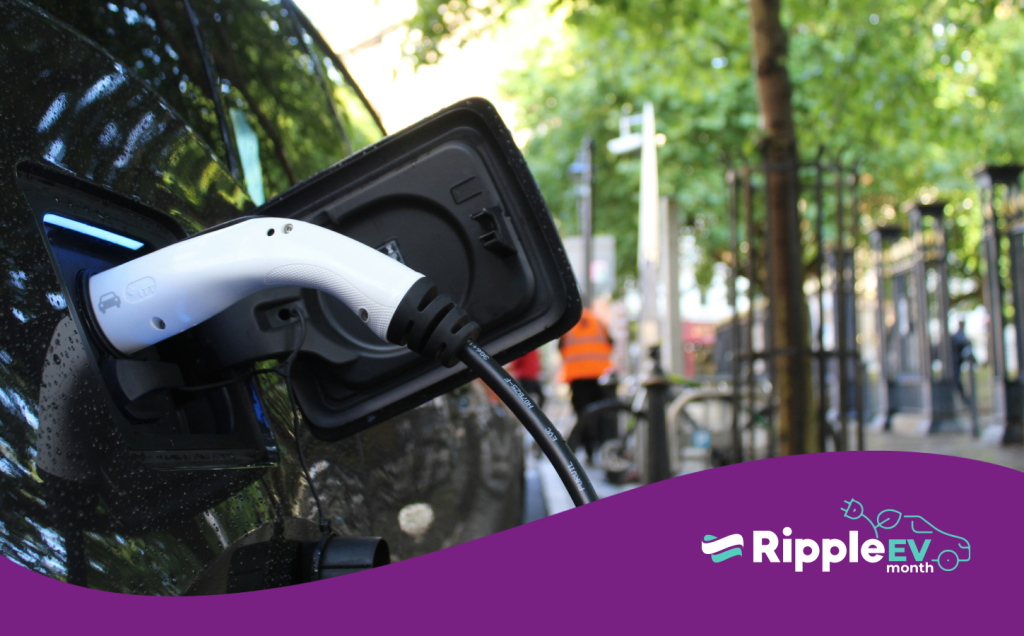
In the simplest terms possible, EVs are vehicles that run on electricity instead of petrol or diesel. Conventional internal combustion engines, which burn fossil fuels to create steam and therefore movement, are replaced with one or more electric motors, powered by a rechargeable battery. Batteries are recharged using charging stations installed at EV owners’ homes, plus an increasing number of public spaces.
There are three main types of EVs:
- Battery Electric Vehicles (BEVs): These rely solely on electricity and have no fossil fuel engine backup. Prime examples include the Tesla 3 and Nissan’s Leaf model
- Plug-in Hybrid Electric Vehicles (PHEVs): Running on both electricity and conventional fuel, PHEVs are considered to be more flexible due to their increased range. Luxury car brands, in particular, have tapped into this ‘stepping stone’ to sustainable car ownership, with the Bentley Flying Spur Hybrid and BMW’s 330e being good examples. More accessible brands have also embraced PHEV technology with Citroen, Hyundai, and Ford all offering multiple models.
- Hybrid Electric Vehicles (HEVs): These low-emission vehicles use an electric motor to assist petrol and diesel-powered engines. All the energy comes from fossil fuels and the batteries do not need to be charged using plug-in technology, they are topped up by the internal combustion engine.
It’s important to note that all plug-in EV models will increase a household’s electricity consumption.
Why are EVs a sustainable choice?
The benefits of EVs are numerous with many citing things such as their almost silent operation, responsive acceleration, and their simple operation. And it’s the latter that appears to hit home for the most conscious consumers with around 75% claiming that the eco benefits of EVs are the primary motivation for buying them. The remaining 25% were lured by reduced running costs, which is something we will come back to shortly.
Discerning buyers are not wrong in their understanding that EVs tread more gently on the planet and their environmental advantages–over petrol and diesel vehicles–have been widely broadcast. Key selling points include:
- Reduced greenhouse gas emissions: A study conducted in 2023 showed that BEVs create, on average, 40-50% less emissions than conventional vehicles, with differing models producing variable results.
- Cleaner air: EVs don’t produce tailpipe emissions, which are a major contributor to air pollution, global warming, and respiratory problems. The benefits of less air pollution are particularly felt in high density urban environments, which is why cities including London and Glasgow have Clean Air Zones, where restrictions encourage people to leave their polluting cars at home.
- Reduced reliance on fossil fuels: EVs directly support the global transition towards renewable energy sources by breaking our daily dependence on fossil fuels. When something as simple as a greener commute makes a tangible environmental impact, widespread climate action can actually happen.
Emerging trends in the EV market
Around half of Ripple members already own an EV, meaning that you’re ahead of the curve when it comes to making cost and environmentally-conscious choices, but what should we be looking out for as more people join the EV revolution?
The global EV market is expanding rapidly and as such, experts are predicting huge improvements to infrastructure, choice, and even renewable energy integration.
The main trend likely to continue is increased battery capacity and range for EV models. Technology in this area is constantly improving and new vehicle models always appear to promote their improved distance capacity, in order to address potential EV buyers “range anxiety,” a term used to describe the fear of not having enough charge to reach a specific destination.
Alongside greater range, faster charging speeds are a key focus for EV manufacturers. Public and private charging infrastructure is developing at pace, with newer stations offering much reduced charging times.
Naturally, more variety in models offered will be an ongoing trend within the EV world, in order to cater to diverse driving needs. Alongside small city hatchbacks, expect to see a flurry of MPVs, SUVs and commercial vehicles too.
But perhaps the most exciting trend to keep tabs on is one that Ripple and its members are already way out in front of: integration with renewable energy. EVs can be even more sustainable when charged with renewable energy sources such as solar or wind power. This–essentially–creates a closed-loop system for clean transportation and can save the owners a lot of money on their energy bills.
How to reduce EV running costs with Ripple
Lower operating costs are a major benefit of EVs as electricity is generally cheaper, mile for mile, than petrol and diesel. However, the changeable nature of energy pricing makes it hard to get a handle on monthly costs, which can skyrocket if you’re not conscious about your tariff and when you use the most energy. Ripple members are able to reduce the cost of charging an EV, while also upping its eco credentials, by charging it with clean, low-cost energy.
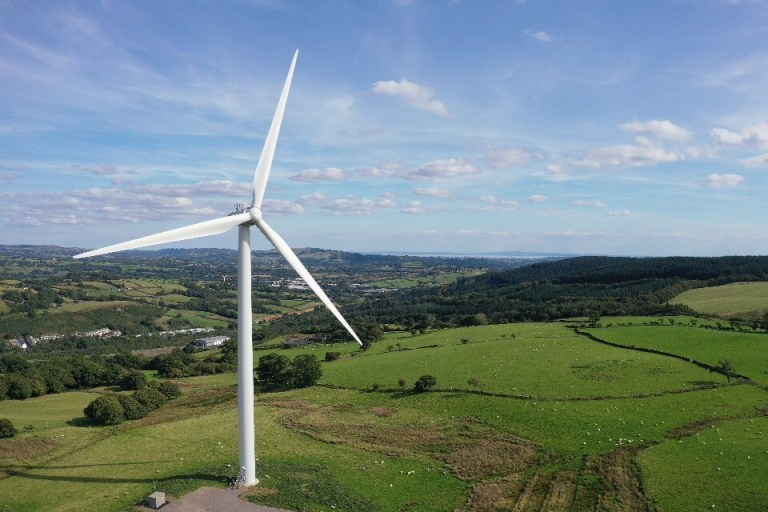
By owning part of a wind farm or solar park, members enable new large-scale renewable energy projects to be built and energised. These help to ‘green’ the grid while also supplying their individual households with a personal supply of sustainably generated electricity. This can be used by members to charge their EVs, while seeing generous savings on their energy bills for years to come.
At Ripple, we think that owning part of a renewable energy project is the perfect accessory for any EV, much more so than an upgraded paint option or a bespoke interior and not just because it will likely be cheaper. It’s a genuinely green gift that will keep giving to you, your energy bills and the environment.
Find out more about how Ripple could lower your EV running costs and energy bills, and secure your place in our next project here or click the button below.